
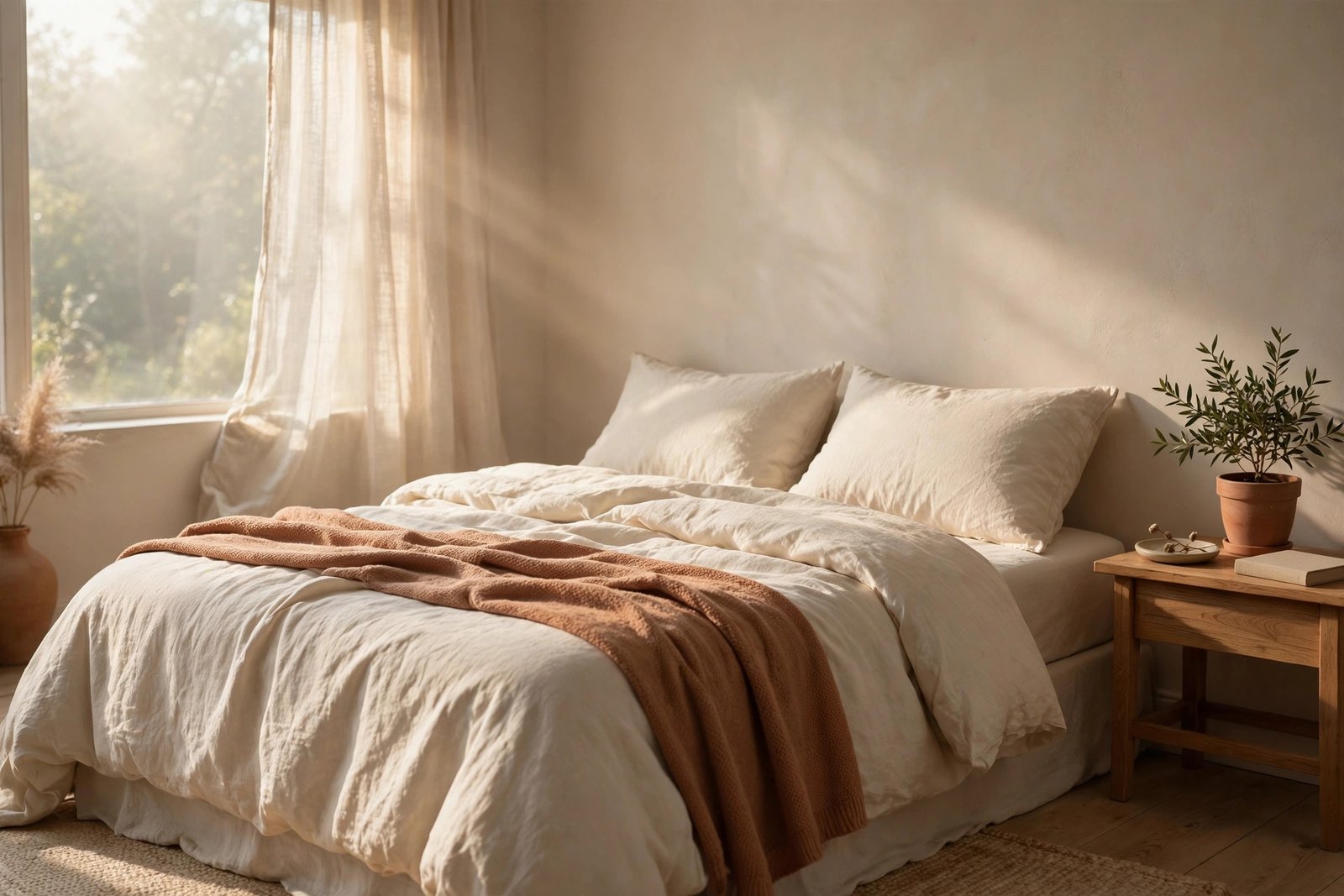
25 Calm Bedroom Decor Ideas for Better Sleep
Your bedroom should be the calmest room in your home — a place where your body and mind can slow down at the end of the day. Yet many bedrooms work against sleep: bright colours, harsh lighting, cluttered surfaces and screens everywhere make it hard to relax, even when you are tired. The good news is that you do not need a full makeover to sleep better. Small, thoughtful changes to colour, bedding, lighting and layout can turn an ordinary bedroom into a restful retreat.
The ideas below are simple, practical and easy to try one at a time. Start with the ones that appeal to you most, and notice how your room — and your sleep — begins to change.
25 Calm Bedroom Decor Ideas for Better Sleep
1. Paint the walls a soft, warm neutral
Choose warm white, soft cream, pale greige or light warm grey for your walls. These colours feel calm rather than stark, reflect soft light well, and give you a peaceful base that works with almost any bedding or furniture you already own.
2. Choose bedding in natural, breathable fabrics
Look for cotton, linen or a cotton blend in a plain colour or a very subtle pattern. Natural fabrics feel comfortable against the skin, help regulate temperature through the night, and give the bed a relaxed, inviting look without any extra effort.
3. Layer the bed with a light throw and one or two cushions
A soft throw folded across the foot of the bed and a couple of cushions in a calm colour add warmth and texture. Keep the number small so the bed still looks tidy and is quick to make in the morning.
4. Keep the bedside table clear and simple
Leave only what you truly need within reach: a lamp, a glass of water and perhaps a book. A clear surface feels calmer than a crowded one, and it makes the whole room feel more organised.
5. Use warm, dimmable lighting
Swap cool white bulbs for warm white ones, and use a dimmer or a lamp with a low setting in the evening. Soft, warm light tells your body that the day is ending and helps you wind down naturally.
6. Add blackout curtains or a blackout blind
Blocking out street lights and early morning daylight helps you fall asleep and stay asleep. Choose curtains in a soft, heavy fabric that also adds warmth and texture to the room.
7. Bring in a small plant
A small potted plant on a bedside table or windowsill adds life and a touch of green without taking over the room. Choose a low-maintenance plant that suits the light in your room, and keep the pot simple and calm.
8. Clear one surface completely
Pick the top of a dresser, a shelf or a windowsill and leave it empty. That single clear space creates a feeling of calm that spreads to the rest of the room, and it gives your eyes somewhere restful to land.
9. Use a soft rug beside the bed
A plush rug in a neutral tone makes the first step out of bed in the morning feel warm and comfortable. It also softens sound in the room and adds a cosy layer underfoot without needing a large carpet.
10. Hang one piece of calming art
Choose a single landscape, abstract print or photograph in soft tones and hang it where you can see it from the bed. One thoughtful piece is far more restful than a busy gallery wall in a room meant for sleep.
11. Keep technology out of sight at night
Charge your phone outside the bedroom if you can, or place it in a drawer. A small alarm clock replaces the need for a glowing screen, and a room without visible chargers and cables feels instantly calmer.
12. Choose wooden furniture in a warm tone
Natural wood — oak, walnut or a warm pine — adds warmth and character without shouting for attention. If your furniture is mismatched, a similar wood tone or a coat of paint in a soft neutral can help it feel like a set.
13. Add a reading corner with a comfortable chair
A small armchair, a soft cushion and a floor lamp in a quiet corner give you a place to read before bed. Keeping reading separate from the bed also helps your body associate the bed with sleep alone.
14. Use linen or cotton curtains in a soft colour
Light, natural curtains in cream, beige or soft sage filter daylight gently during the day and look soft and relaxed when drawn. Avoid shiny or heavily patterned fabrics, which can make a calm room feel busy.
15. Keep the colour palette to three calm colours
Pick one main colour for the walls and bedding, one secondary colour for cushions and throws, and one accent for small details. A limited palette — for example, cream, beige and soft terracotta — keeps the room feeling peaceful and pulled together.
16. Make the bed every morning
A made bed instantly makes the whole room look tidy, and coming home to a neat bed in the evening feels welcoming. It takes only a couple of minutes, and it is one of the simplest habits for a calmer bedroom.
17. Use soft, indirect light in the evening
A small lamp behind a chair, a warm bedside light or a string of soft fairy lights gives a gentle glow without the harshness of a ceiling light. Low, indirect light is kinder on the eyes and better for winding down.
18. Add a simple headboard in fabric or wood
A padded fabric headboard in a neutral colour or a simple wooden one makes the bed feel finished and comfortable to lean against while reading. It also softens the wall behind the bed and adds a focal point without pattern or clutter.
19. Store clutter in closed boxes and drawers
Use baskets, boxes and drawers to keep everyday items out of sight. When surfaces are clear and everything has a place, the room feels larger, quieter and easier to relax in.
20. Choose a calming scent for the room
A linen spray, a small diffuser or a scented candle used safely before bed can make the room feel like a retreat. Lavender, cedarwood and chamomile are popular choices, but use whatever gentle scent you find relaxing.
21. Hang a mirror to reflect soft daylight
A mirror placed opposite or beside a window bounces natural light around the room and makes it feel brighter and more spacious during the day. Choose a simple frame and keep the mirror at a size that suits the wall.
22. Keep the floor clear and easy to walk across
Leave a clear path from the door to the bed and the wardrobe, and avoid piling clothes or boxes on the floor. A clear floor makes the room feel bigger, safer at night, and much easier to keep tidy.
23. Use matching or coordinating bedding sets
Bedding in coordinating colours — for example, a cream duvet with beige pillowcases — looks calm and intentional without trying too hard. It also makes choosing bedding in the morning quicker and simpler.
24. Add texture with a woven basket or a knitted throw
Natural textures such as woven seagrass, rattan, wool or linen add warmth and interest without adding colour or pattern. A basket for extra blankets or a knitted throw on a chair makes the room feel cosy and lived in.
25. Create a simple bedtime routine corner
Set aside a small tray or shelf with the things that help you wind down — a book, a notebook, a glass of water and your lamp. Having one calm, ready spot makes it easier to switch off screens and settle into a regular bedtime routine.
Frequently Asked Questions
What colours help you sleep better in a bedroom?
Soft, muted colours tend to work best for sleep. Warm whites, soft creams, pale greys, sage green, dusty blue and warm beige all feel calm and restful. Very bright colours, strong reds and high-contrast patterns can feel stimulating, so it is better to use them in small accents — if at all — rather than on large walls or bedding.
How can I make my bedroom feel calm without spending much money?
Start with what costs nothing: clear the surfaces, make the bed, remove screens and chargers from view, and open the curtains during the day. Then try low-cost changes such as warm light bulbs, a fresh set of plain bedding, or moving a plant into the room. Paint is one of the cheapest ways to change the whole feeling of a room.
Should I have a television in the bedroom?
A television in the bedroom can make it harder to fall asleep, because the light and sound keep your mind alert and the bed becomes associated with watching rather than sleeping. If you can, keep the television in another room and use the bedroom mainly for sleep and quiet reading. If you do keep one, try switching it off at least half an hour before you want to sleep.
What kind of lighting is best for a bedroom?
Warm, layered lighting works best. Use a soft ceiling light or a dimmer for general light, a bedside lamp for reading, and a low, warm light in the evening. Avoid bright, cool-white bulbs, especially at night, and try to keep the room dark when you sleep, with blackout curtains or a blind if needed.
How do I keep my bedroom tidy enough to feel relaxing?
Give everything a home, use closed storage for clutter, and build in a tiny daily habit: make the bed in the morning and spend two minutes clearing surfaces before bed. Keeping only what you use and love in the bedroom — and moving everything else elsewhere — makes tidying quick and the room much easier to relax in.
Conclusion
Better sleep often starts with a calmer bedroom, and a calmer bedroom starts with a few simple choices: soft colours, comfortable natural bedding, warm lighting, clear surfaces and a little less clutter. You do not need to change everything at once. Pick one or two ideas from this list — perhaps the bedding, the lighting or a proper clear-out — and see how your room feels after a week. Small changes add up, and a bedroom that helps you unwind at night will repay you every single morning.
Keep Exploring
- Kids Room Decor — calm, practical ideas for children’s bedrooms.
- Living Room Decor — warm, welcoming ideas for the rest of your home.
- RoomOraIdeas Home — explore all ten home decor categories, from bedrooms to DIY projects.