
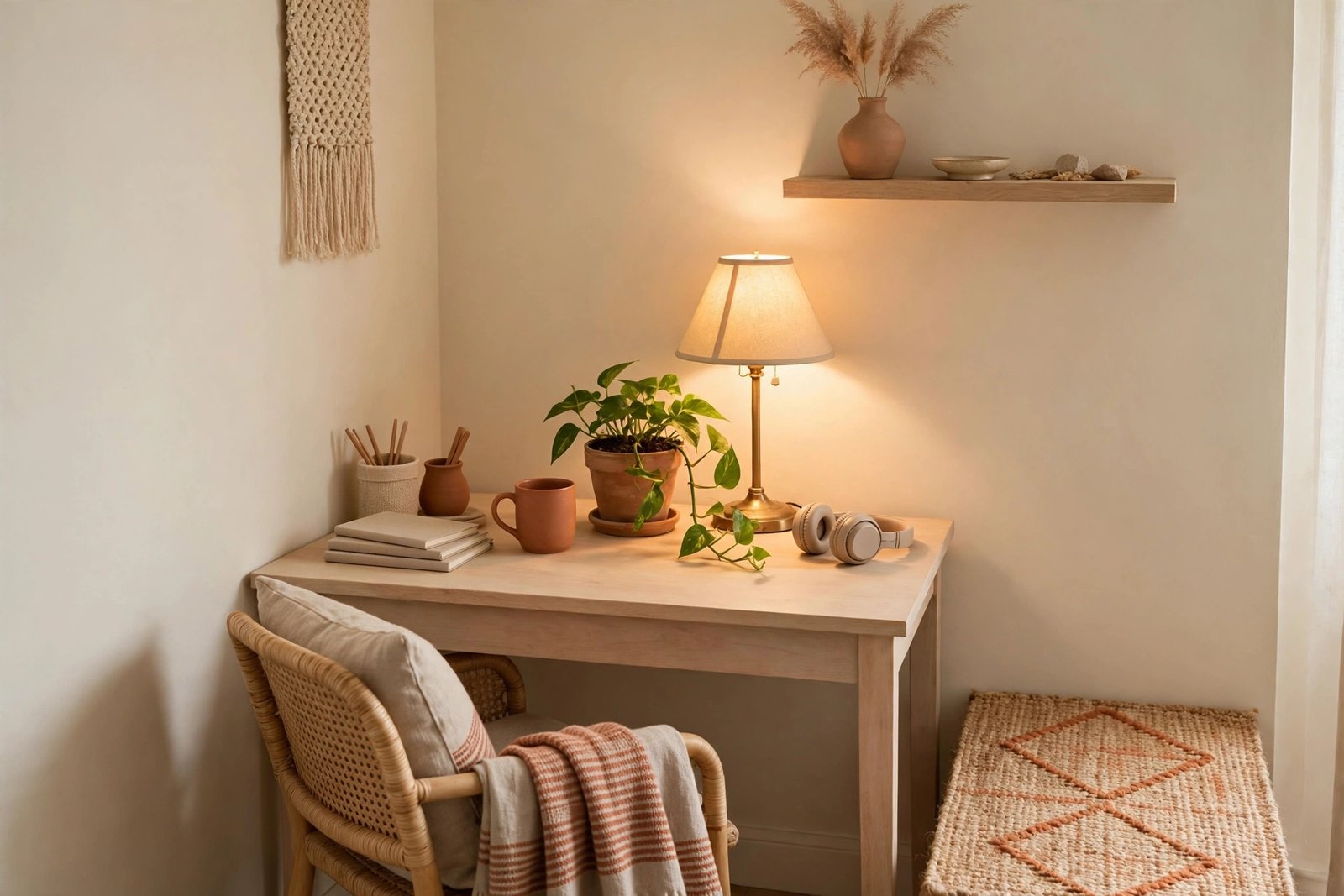
25 Small Home Office Decor Ideas for Productivity
Working from home is much easier when your workspace feels calm, organised and pleasant to sit in. A small home office does not need a big room or an expensive makeover — it needs smart choices that support focus, comfort and good habits. These home office decor ideas show how to turn even a tiny corner into a productive workspace, using light, storage, colour and simple routines that help you get more done without feeling cramped.
1. Choose a Dedicated Corner, Not a Shared Surface
Pick one spot that is only for work, even if it is just a corner of a bedroom or living room. When your desk has a fixed place, your mind learns to switch into work mode as soon as you sit down. Keep that corner tidy and free from household clutter so it always feels ready to use.
2. Place Your Desk Near Natural Light
Set your desk beside or facing a window so daylight falls on your workspace during the day. Natural light lifts your mood, reduces eye strain and makes a small room feel larger and fresher. Add a sheer curtain if the sun is too bright, rather than blocking the window completely.
3. Use a Light, Calm Colour Palette
Paint or decorate your office corner in soft whites, warm cream, pale sage or light grey. Light colours reflect daylight, make tight spaces feel open and create a calm background for concentration. Add one warm accent, such as terracotta or soft wood, so the space still feels welcoming.
4. Add a Comfortable, Supportive Chair
A good chair is the most important piece of home office furniture, especially if you sit for long hours. Choose one with lower-back support, an adjustable height and a seat that lets your feet rest flat on the floor. Comfort prevents aches and helps you stay focused for longer.
5. Keep Your Desk Surface Clear
Leave only the essentials on your desk: your laptop or notebook, a pen, a glass of water and perhaps a small plant. A clear surface reduces visual distraction and makes it easier to start work. Store everything else in a drawer, shelf or basket at the end of each day.
6. Add a Desk Lamp with Warm Light
A desk lamp with warm, adjustable light is useful on cloudy days and in the evening. Position it on the opposite side to your writing hand so it does not cast shadows over your work. Warm light feels cosy in the evening, while a brighter setting helps you stay alert.
7. Use Wall Shelves Instead of Floor Storage
Floating shelves above or beside your desk give you storage without taking up floor space. Use them for books, files, stationery and a few decorative pieces. Keep the shelves neat and leave some empty space so the wall does not feel crowded or heavy.
8. Try a Pegboard for Tools and Supplies
A pegboard above your desk keeps scissors, cables, notes and small supplies visible and within reach. Hooks, small shelves and baskets can be moved around as your needs change. It is a flexible, budget-friendly way to stay organised in a small home office.
9. Hide Cables with a Simple Cable Organiser
Loose cables make a small desk look messy and can be distracting. Use cable clips, a cable tray under the desk or a small box to gather chargers and wires together. Tidy cables make the whole workspace look calmer and more professional.
10. Add One Green Plant to Your Desk
A small plant, such as a pothos, snake plant or succulent, brings life and colour to your desk. Plants soften a workspace, improve the feeling of fresh air and give your eyes a natural resting point during breaks. Choose a low-maintenance plant if you are new to plant care.
11. Use a Noticeboard or Whiteboard for Daily Priorities
Pin or write your three most important tasks for the day where you can see them. A small cork board, whiteboard or simple paper planner on the wall keeps your priorities visible and stops you from forgetting key tasks. Clear it each evening so the next morning starts fresh.
12. Invest in Good Task Lighting and Screen Position
Place your screen at eye level, about an arm’s length away, to avoid neck strain. A laptop stand or a stack of books can raise the screen to the right height. Good lighting and a comfortable screen position reduce tiredness and help you work longer without discomfort.
13. Create Zones with a Rug or Room Divider
In an open-plan room, a small rug under your desk or a slim folding screen can mark your office zone. This visual boundary tells your brain that this area is for work, even when the rest of the room is for relaxing. It also helps other people in the home respect your work time.
14. Choose Multifunctional Furniture
Look for a desk with built-in drawers, a fold-down wall desk or a small cabinet that doubles as a printer stand. Multifunctional furniture saves space and keeps supplies close at hand. In a small home office, every piece should earn its place by doing more than one job.
15. Add Inspiring Wall Art at Eye Level
Hang one or two framed prints, a calm landscape or a simple motivational quote where you can see them while you work. Wall art adds personality and makes the space feel finished, but keep it simple so it inspires rather than distracts. Choose art in colours that match your room.
16. Use Baskets and Boxes to Contain Clutter
Matching baskets, boxes or fabric storage cubes keep papers, chargers and craft supplies out of sight. Label each box so you can find things quickly without opening them all. Contained clutter looks tidy, even when the boxes themselves are full.
17. Keep a Water Bottle and Healthy Snacks Nearby
Staying hydrated helps concentration, so keep a water bottle on your desk and refill it during breaks. A small bowl of fruit or nuts nearby stops you from wandering to the kitchen too often. Small comforts like these support steady energy through the working day.
18. Add a Small Clock to Manage Your Time
A simple wall or desk clock helps you keep track of work sessions and breaks without checking your phone. Try working in focused blocks of about 25 to 50 minutes, followed by a short break. A visible clock makes it easier to stick to that rhythm.
19. Soundproof Your Corner with Soft Furnishings
Soft furnishings such as curtains, a rug, cushions and fabric wall hangings absorb sound and reduce echo in a small room. They also make the space feel warmer and more comfortable. If your home is noisy, a pair of headphones can help you focus even further.
20. Personalise with One or Two Meaningful Objects
Add a framed family photo, a favourite mug or a small souvenir that makes you smile. A couple of personal touches make your office feel like yours and boost your mood. Keep personal items to a minimum, though, so they inspire you without crowding your desk.
21. Use Vertical Space with a Tall, Slim Bookcase
A tall, narrow bookcase or ladder shelf uses wall height instead of floor space. Store reference books, files and decorative items on it, keeping the most-used items at arm level. Vertical storage is one of the best solutions for a small home office.
22. Set Up a Charging Station in One Place
Create a single charging spot for your phone, tablet and headphones, ideally in a drawer or on a small tray away from your main work area. Charging everything in one place stops cables from spreading across your desk and reduces the temptation to check your phone constantly.
23. Rotate Your Decor with the Seasons
Change a cushion, a print or a small vase with the seasons to keep your workspace feeling fresh. A simple swap — a warm throw in winter, a light linen cushion in summer — makes the room feel new without spending much. Small changes can renew your motivation to sit down and work.
24. Keep Your Background Tidy for Video Calls
If you take video calls, make sure the wall or shelf behind you looks neat and professional. A plain wall, a small plant and one framed print are enough. A tidy background helps you feel confident on camera and leaves a good impression on colleagues and clients.
25. End Each Day with a Five-Minute Reset
Spend five minutes at the end of your working day clearing your desk, closing tabs, writing tomorrow’s top three tasks and putting things away. A short reset means you start the next morning in a clean, calm space instead of facing yesterday’s mess. It is a small habit with a big effect on productivity.
Frequently Asked Questions
How can I make a small home office more productive? Start with the basics: a dedicated spot, good light, a comfortable chair and a clear desk. Add simple storage, a daily task list and a short end-of-day reset. Small, consistent habits matter more than expensive furniture.
What colours are best for a productive home office? Soft, light colours such as white, cream, pale sage, light blue and warm grey work well because they feel calm and reflect daylight. Add one warm accent colour, such as terracotta or wood tones, so the room does not feel cold or plain.
How do I set up a home office in a small bedroom? Choose a corner near a window, use a compact or fold-down desk, and add wall shelves instead of floor storage. A rug or screen can mark the work zone, and a tidy background will help if you take video calls from the room.
Do plants really help in a home office? Plants do not replace good lighting or organisation, but they do make a workspace feel fresher and more pleasant. A small, low-maintenance plant on your desk gives your eyes a natural resting point and adds colour to a plain corner.
What is the cheapest way to improve a home office? Clear the desk, hide the cables, add a desk lamp and a small plant, and put up a simple task board. These low-cost changes improve light, order and focus, and they make a bigger difference than buying new furniture first.
Conclusion
A productive small home office is not about size or spending — it is about light, order, comfort and simple daily habits. Choose a dedicated corner, keep your desk clear, store things vertically, and add a few personal touches that make you want to sit down and work. Start with two or three ideas from this list, try them for a week, and build on what works for you. A calm, well-organised workspace will repay the effort every single day.