
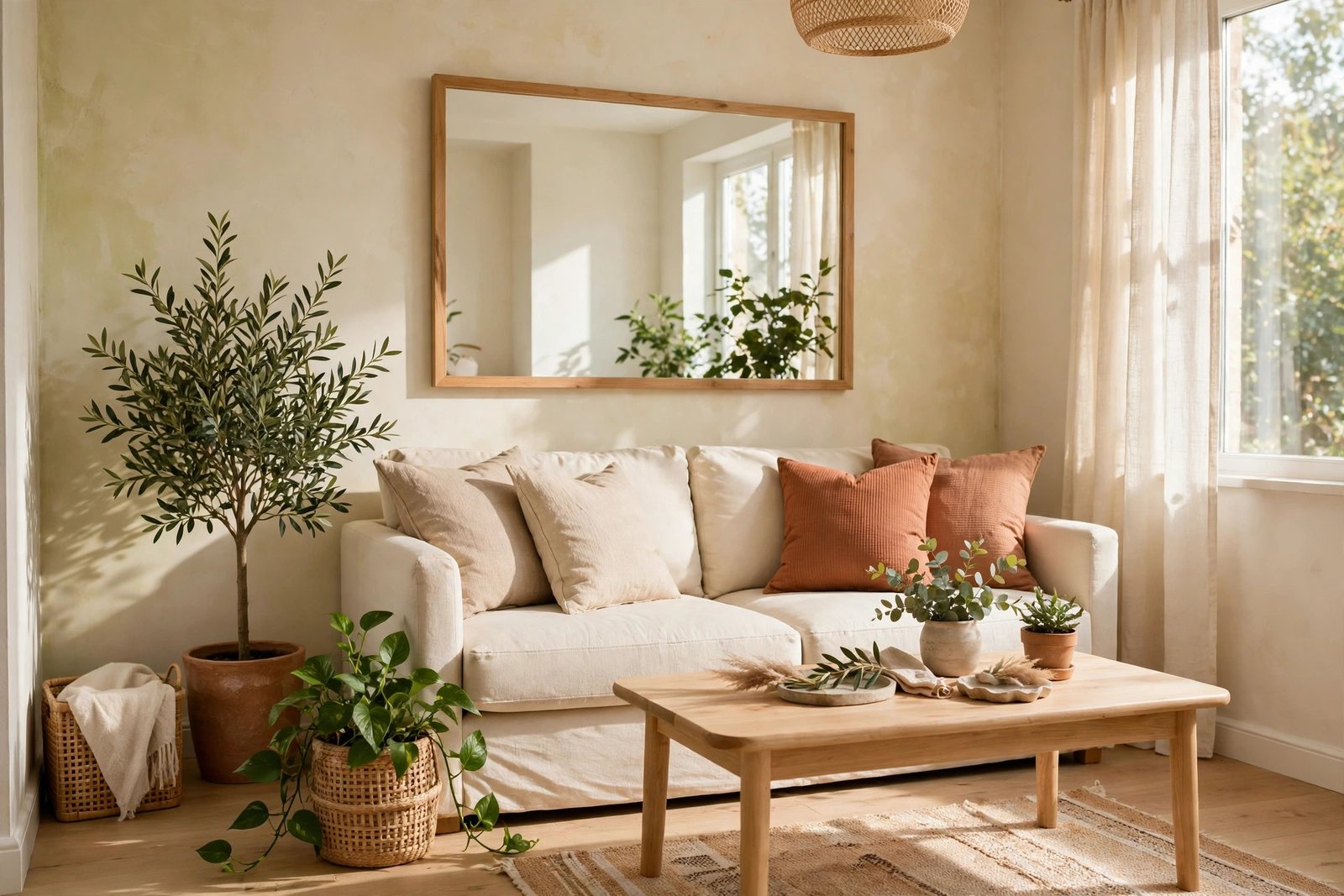
25 Small Living Room Decor Ideas That Feel Bigger
A small living room does not have to feel cramped. With the right layout, colours and furniture choices, even the tiniest space can feel open, bright and comfortable. The secret is to choose pieces that work hard, keep walkways clear and let light move freely through the room.
These 25 small living room decor ideas are practical, affordable and easy to try in a rented home or your own place. Pick a few that suit your room, start with the biggest change first, and build from there.
25 Small Living Room Decor Ideas
1. Choose a Sofa That Fits the Room
Pick a sofa that leaves space to walk around it instead of filling the whole wall. A two-seater or a compact three-seater usually works better than an oversized corner sofa in a small room. Leave a small gap behind it so the room can breathe.
2. Hang a Large Mirror
A large mirror reflects light and makes the wall behind it feel like another part of the room. Hang it opposite a window for the best effect, or above the sofa as a simple focal point. Choose a slim frame so it does not look heavy.
3. Use Light, Warm Colours
Cream, soft white, pale grey and warm beige make walls feel further away and ceilings feel higher. Paint the walls and ceiling in a similar light tone to avoid sharp lines that break the room up. Add colour through cushions and throws instead.
4. Keep the Coffee Table Slim
A slim coffee table, or a small round one, leaves more floor space visible and is easier to walk around. Glass or light wood tops feel lighter than dark, chunky tables. If space is very tight, try a pair of small side tables instead.
5. Add Leggy Furniture
Furniture with slim, visible legs lets you see the floor underneath, which makes the room feel larger. Sofas, chairs and cabinets on legs look lighter than pieces that sit flat on the floor. This small detail makes a surprising difference.
6. Use Multi-Purpose Furniture
Choose furniture that does more than one job, such as an ottoman with storage inside or a coffee table with a shelf below. A sofa bed is useful in a small home when guests stay over. Fewer pieces with more uses means less clutter.
7. Go Vertical With Storage
Tall, slim shelves draw the eye upward and use wall space instead of floor space. A narrow bookcase in a corner can hold books, plants and baskets without crowding the room. Keep the top shelves light and the heavier items lower down.
8. Keep Curtains High and Wide
Hang curtain rods close to the ceiling and wider than the window so the curtains frame the glass rather than covering it. This makes the window look larger and lets in more daylight. Choose light, flowing fabric in a colour close to the walls.
9. Use One Large Rug, Not Several Small Ones
A single large rug that sits under the front legs of the sofa and chairs pulls the seating area together. Several small rugs can chop the floor into pieces and make the room feel busy. Pick a plain or lightly patterned rug in a pale tone.
10. Add Plants for Life and Height
A tall plant in a corner adds height without taking up much floor space, while small plants on shelves bring colour at eye level. Green leaves soften hard edges and make a small room feel fresh. Choose low-maintenance plants if you are new to plant care.
11. Float the Sofa Away From the Wall
Pulling the sofa a few inches away from the wall creates a sense of space behind it and stops the room feeling boxed in. It also makes the seating area feel intentional rather than pushed aside. Even a small gap is enough to change the look.
12. Use Clear or Light Furniture Pieces
A glass coffee table, acrylic side table or light wood chair lets light pass through and keeps sightlines open. These pieces take up physical space but feel visually light. Use one or two clear pieces rather than filling the room with them.
13. Layer Lighting Instead of One Ceiling Light
Combine a floor lamp, a table lamp and soft ceiling light so the room feels warm and evenly lit. Dark corners make a room feel smaller, so place a lamp near the darkest corner. Warm bulbs feel more welcoming than harsh white light.
14. Keep Surfaces Mostly Clear
A clear coffee table and tidy shelves make a room feel calm and spacious. Keep only two or three items on each surface, such as a book, a candle and a small plant. Put the rest away in a basket or cabinet so clutter does not build up.
15. Choose Armless or Slim-Arm Chairs
Chairs with slim arms, or no arms at all, take up less visual space than wide, padded armchairs. They are easier to move around when you need extra seating. Pair one slim chair with your sofa instead of matching bulky chairs.
16. Use Wall-Mounted Shelves and Lights
Wall-mounted shelves, sconces and a wall-hung television free up floor space and keep the room tidy. Floating shelves beside the sofa can hold books and a lamp without needing a side table. Mounting things on the wall keeps the floor clear for walking.
17. Create One Focal Point
Choose one clear focal point, such as a piece of art, a mirror or the television wall, and arrange furniture around it. A single focus stops the eye wandering and makes the room feel organised. Keep other walls simple so the focal point stands out.
18. Use Stripes or Vertical Details
Vertical stripes on a cushion, tall artwork or a striped rug can make a ceiling feel higher. Use this trick lightly — one striped element is enough. Too many patterns at once can make a small room feel busy rather than tall.
19. Pick a Round Coffee Table
A round coffee table has no sharp corners, so it is easier to move around in a tight space. It also softens a room full of straight lines from the sofa and television. A round table works well when the sofa and chairs face each other.
20. Use Matching Cushions in Light Tones
Cushions in cream, beige, soft sage or terracotta add warmth without breaking the room into blocks of colour. Stick to two or three tones and mix textures, such as linen, cotton and velvet, for interest. This keeps the sofa looking calm and pulled together.
21. Store Things in Baskets and Boxes
Woven baskets and neat storage boxes hide remotes, chargers, toys and magazines in plain sight. Place one basket beside the sofa and one under a console table. Storage that looks like decor keeps the room tidy without adding bulky furniture.
22. Keep the Television Wall Simple
Mount the television on the wall and keep the area below it simple with a slim console or a single shelf. A busy television wall with many small items can make the room feel crowded. Hide cables in a trunking strip for a clean finish.
23. Let Natural Light In
Keep windows clear of heavy furniture and tall objects so daylight reaches deep into the room. Clean windows and light curtains help more light through. If one side of the room is dark, place a mirror there to bounce light across.
24. Use a Consistent Colour Palette
A consistent palette of three or four colours across the sofa, rug, curtains and cushions makes a small room feel calm and connected. When every piece shares a tone, the room reads as one space instead of many separate parts. Add one accent colour sparingly for warmth.
25. Edit Ruthlessly and Leave Breathing Room
Step back and remove one or two items you do not love or use. Empty space is part of the design in a small room — it lets the pieces you keep stand out. A room with breathing room always feels bigger than a room filled to the edges.
Frequently Asked Questions
What is the best colour for a small living room?
Light, warm neutrals such as cream, soft white, pale grey and warm beige work best. They reflect light and make walls feel further apart. Add depth with darker cushions, wood tones or a single accent colour rather than painting the whole room dark.
How do I arrange furniture in a small living room?
Start with the sofa facing the focal point, usually the television or a window, and leave a clear walkway of at least 60 centimetres where possible. Pull furniture slightly away from the walls, use slim pieces, and avoid blocking windows or doorways.
Should I use a large rug in a small living room?
Yes, one large rug usually works better than several small ones. It should be big enough to sit under the front legs of the sofa and chairs, which pulls the seating area together and makes the floor feel like one continuous space.
Can a mirror really make a small living room look bigger?
Yes, a large mirror reflects light and the view opposite it, which creates the impression of extra depth. Hang it opposite a window or beside a light source for the strongest effect, and keep the frame slim and simple.
How can I add storage without making my living room feel crowded?
Use tall, slim shelving, furniture with hidden storage, and baskets that blend with your decor. Wall-mounted shelves and a slim console keep storage off the floor, and keeping surfaces mostly clear stops the room feeling cluttered.
Conclusion
A small living room feels bigger when light can move, furniture fits the space, and clutter stays under control. You do not need a renovation or expensive furniture — a large mirror, light colours, leggy pieces and one large rug can change the whole feel of the room.
Start with the ideas that cost the least, such as moving the sofa, clearing surfaces and hanging curtains higher. Then add one or two pieces that solve a real problem, like storage or seating. Small changes, made with care, add up to a living room that feels open, calm and welcoming every day.