
Kids Room Decor Ideas: Ultimate Guide for Children
A child’s bedroom is far more than a place to sleep. It is where they play, read, imagine, learn, rest and grow. The best kids room decor ideas balance all of those jobs at once: a room that feels warm and welcoming, works hard every day, and can change easily as your child grows. You do not need a large budget or a complete makeover to get there. With a clear plan, a few thoughtful choices and some clever storage, even a small room can feel calm, creative and truly theirs.
This guide walks you through decorating a children’s room step by step — by age, by colour, by theme, by furniture and by budget — so you can make confident decisions and avoid the most common mistakes, such as buying furniture that is outgrown in a year or choosing a theme that is hard to live with. Whether you are starting from an empty room or refreshing a space your child has already outgrown, you will find practical ideas you can use straight away.
Decorating by Age
Children change quickly, and their rooms should change with them. A room that works beautifully for a baby will frustrate a seven-year-old, and a tween will want something quite different again. Planning by age helps you spend money where it matters most and avoid buying things twice.
Baby and Toddler Rooms
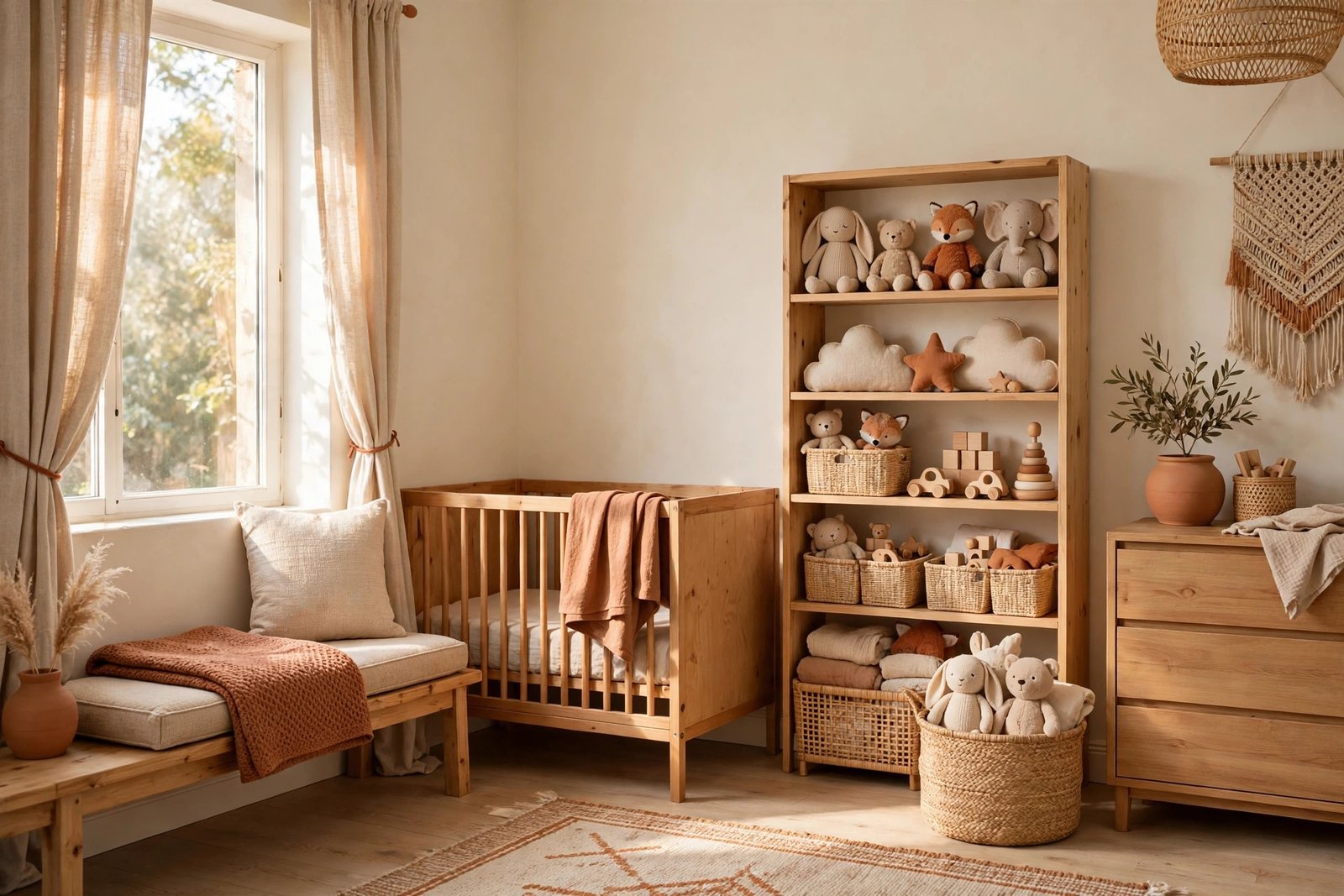
For babies and toddlers, safety and calm come first. Choose a cot or toddler bed that meets current safety standards, keep the sleeping area clear of loose bedding, pillows and large soft toys, and leave plenty of open floor space for crawling, first steps and play. Soft, washable rugs are a practical choice here, because little ones spend so much time on the floor.
Keep the colour palette gentle. Warm whites, soft sage, pale blue, blush and warm beige all create a restful feeling and work well with natural wood. Add interest with a few carefully chosen touches rather than a busy pattern on every wall: a simple wall decal, a framed print, a mobile above the cot, or a row of soft fabric bunting. Low, open shelves put a small selection of books and toys within easy reach, which encourages independent play and makes tidying up simpler.
A comfortable chair for feeding, reading and cuddles is worth the space it takes. Place it near a soft lamp so evening routines feel calm. Blackout curtains or blinds help with naps and early bedtimes, while a dimmable light lets you check on your child without waking them fully. Think ahead, too: a cot that converts into a toddler bed, and a dresser that can later hold clothes for an older child, will save you money and effort in the long run.
Young Kids (Ages 4 to 8)
Between the ages of four and eight, children develop strong opinions — and they should have a say in their room. Let them choose between two or three options you are happy with, such as the colour of their bedding, a favourite animal print, or the theme for one wall. That small amount of choice makes the room feel like theirs without handing over the whole design.
This is the age for a proper bed, a small desk or table for drawing and homework, and a reading corner. A low bookshelf, a beanbag or a floor cushion and a small basket of books can turn an unused corner into the most-loved spot in the room. Display space matters as well: a simple picture ledge, a cork board or a washing line with pegs lets children show off their drawings and change the display whenever they like.
Storage needs to be simple enough for a child to use alone. Open baskets, labelled boxes and low cubbies work far better than deep drawers or high cupboards. Keep the toys they play with most at their height, and rotate the rest. A room with fewer toys on display almost always looks tidier and feels calmer, and children often play more creatively when they are not overwhelmed by choice.
Tweens (Ages 9 to 12)
Tweens want a room that feels more grown up, with space for friends, homework, hobbies and privacy. This is a good time to move away from a single cartoon theme and towards a style they can live with for several years — for example, a calm base colour with accents they can change, such as bedding, cushions, posters and a desk lamp.
A proper desk and a comfortable chair become essential at this age, along with good lighting for reading and homework. Storage needs grow as well: space for books, school supplies, sports kit, craft materials and a growing wardrobe. A bed with drawers underneath, a tall bookcase and a few sturdy boxes can make a real difference in a small room.
Let your tween lead the choices on colour and art, within a budget you agree together. A feature wall in their favourite colour, a gallery of framed prints, photos and posters, or a pinboard for tickets, photos and notes all help a room feel personal. Keep the larger pieces — bed, wardrobe, desk — neutral and long-lasting, so the room can be refreshed with small, affordable swaps instead of another full makeover.
Choosing Colours
Colour sets the mood of a room more than almost anything else, so it is worth choosing slowly. Start with the feeling you want: calm and restful for sleep, bright and cheerful for play, or a balance of both. In most children’s rooms, a calm base with cheerful accents works best.
Soft neutrals make an excellent base. Warm white, cream, light grey and warm beige keep a room feeling bright and spacious, and they work with almost any accent colour. They also make it easy to change the look later — swap the bedding and cushions, and the whole room feels new. If you want more colour, paint one wall in a soft shade and keep the others neutral. Sage green, dusty blue, soft terracotta, pale yellow and blush pink are all popular choices because they feel warm without being overwhelming.
For small or dark rooms, lighter colours are usually the safer choice, because they reflect more light and make the space feel larger. In a larger room, you can afford a deeper shade on one wall, such as a muted forest green, navy or warm clay, to add depth and cosiness. Always test a paint colour on the wall first and look at it in both daylight and evening light before you commit, because colours can look very different once they are on the wall.
A simple rule that helps many parents is to use three colours: one main colour for the walls and larger furniture, one secondary colour for bedding and curtains, and one accent colour for cushions, art and small accessories. That keeps the room feeling pulled together without looking matched to within an inch of its life. And remember that children change their favourite colour often — bedding, cushions and posters are easy to change, while a painted wall is not.
Themes That Grow With Your Child
A theme can make a room feel magical, but the best themes are flexible. A theme that depends on one character or one very specific look can feel dated quickly and is expensive to replace. A broader theme — nature, space, the sea, animals, adventure, books or music — can grow with your child for years.
A nature theme, for example, works for a toddler who loves animals and for a ten-year-old who loves plants and maps. Start with leafy green and warm wood tones, add animal prints or a tree decal, and later swap in botanical posters, a globe and a collection of nature books. A space theme can begin with stars on the ceiling and a rocket print, then grow into planets, books about the solar system and a telescope by the window.
If your child loves a particular character or film, use it in the accessories rather than the furniture or the walls. A duvet cover, a poster and a cushion are easy to change when their interests move on, while a character bed or a themed wallpaper is not. Mix themed pieces with plain, solid-coloured items so the room never feels like a shop display. And leave some walls and surfaces clear: a room needs breathing space, and your child needs somewhere to add their own drawings, photos and collections.
Furniture: Practical Pieces That Last
Good children’s furniture is sturdy, safe and sized for the child who will use it. Before you buy anything, measure the room carefully — including doorways, windows, radiators and plug sockets — and sketch a simple plan. Leave clear paths for walking, space for the door to open fully, and enough open floor for play.
The bed is the most important piece. Choose a solid frame, a good-quality mattress and bedding your child finds comfortable. A bed with storage drawers underneath is a smart choice for a small room, and a cabin bed or a mid-sleeper can free up floor space for a desk or a play area underneath — but only if your child is old enough and confident using it safely. A low bed is usually best for younger children.
A wardrobe or dresser should be at a height your child can reach, with drawers that open and close smoothly. Open shelving, low bookcases and cubby units work well for books and toys, and they make it easy for children to find things and put them away. A small table and chair set is useful for drawing, crafts and puzzles in the early years, while an older child needs a desk with enough surface for books, a lamp and a laptop or tablet.
Choose furniture in natural wood, white or a soft neutral colour where you can. It lasts longer visually, matches more bedding and accessories, and is easier to hand down or resell. Avoid very trendy shapes or bright colours for the big pieces, and add personality through the smaller, cheaper items instead. Always fix tall furniture to the wall with the straps or brackets supplied, so it cannot tip over if a child climbs on it.
Storage and Organisation
Most children’s rooms do not suffer from a lack of storage — they suffer from storage that is hard to use. The goal is simple: everything should have a place, and your child should be able to reach it, use it and put it back without help.
Start by sorting. Keep the toys, books and clothes your child actually uses, and set aside anything broken, outgrown or untouched for months. Fewer things make a room easier to tidy and easier to enjoy. Then group what is left: books together, art supplies together, soft toys together, dressing-up clothes together, and so on.
Use a mix of storage types. Open baskets and boxes are best for everyday toys, because children can see what is inside and put things away quickly. Labelled boxes with pictures as well as words help younger children tidy up independently. Closed cupboards and drawers are better for things you want out of sight, such as spare bedding, out-of-season clothes and craft supplies that need supervision.
Make the most of the space you have. Under-bed drawers and boxes use space that would otherwise be wasted. Hooks on the back of a door hold dressing-up clothes, bags and hats. A narrow bookcase fits into a gap beside a wardrobe. A shelf high on the wall is a good place for treasured ornaments and books you want to keep out of reach. And a small tidy-up routine — five minutes together before bath time, for example — works far better than a big clear-out once a month.
Walls and Art
Walls are where a child’s room really comes alive, and they are also one of the easiest and cheapest places to change. A fresh coat of paint, a few framed prints and a display of your child’s own work can transform a plain room without any new furniture.
Choose art that means something to your child. Framed prints of animals, maps, the alphabet, favourite places or inspiring words all work well, and they can be swapped as interests change. A gallery wall of small frames looks thoughtful and grown up, while a single large print makes a simple statement above a bed or a desk. Mix framed art with your child’s own drawings — a picture ledge is ideal for this, because pictures can be changed in seconds without new holes in the wall.
Wall decals and removable stickers are a gentle way to add pattern or a theme without committing to wallpaper. They are especially useful in a rented home or when you want to try a look before you commit. If you do choose wallpaper, consider using it on one wall only, so the room does not feel busy and the cost stays low. A chalkboard wall or a large pinboard gives children a place to draw, plan and display their ideas, and it can be repainted or replaced as they grow.
Keep some wall space empty. A room with every wall covered can feel overwhelming, especially for a child who needs calm to sleep. Let the art breathe, and let your child’s own creations take pride of place.
Lighting
Good lighting makes a room feel warm, safe and comfortable at every time of day. Most children’s rooms need three kinds of light: general light for the whole room, task light for reading and homework, and soft light for bedtime.
A ceiling light with a warm bulb gives even, general light. A dimmer switch, where possible, lets you lower the light in the evening and create a calmer mood before bed. A desk lamp or a clip-on reading light is essential for older children, and a small bedside lamp gives younger children a sense of security at night. A night light with a warm, gentle glow can help a child who is afraid of the dark, and it makes night-time trips to the bathroom safer.
Natural light matters just as much. Keep windows clear of heavy furniture, choose curtains or blinds that let in daylight during the day and block it out at night, and place a reading corner or a desk near a window where you can. Blackout curtains or a blackout blind help with sleep, especially in summer when it stays light late. Avoid harsh, cool-white bulbs in a bedroom — warm white light feels cosier and is better suited to evenings.
Safety matters with lighting, too. Keep lamps stable and out of reach of very small children, keep cords tucked away, and choose shades and bulbs that do not get hot. Battery-operated fairy lights can add a magical touch, but keep them out of reach of babies and toddlers, and never leave them on overnight.
Budget-Friendly Tips
A beautiful children’s room does not need a big budget. In fact, some of the most loved rooms are the ones that have been put together slowly, with a mix of new, second-hand and handmade pieces.
Start with paint — it is the cheapest way to change a room completely. A fresh coat in a warm white or a soft colour, plus new bedding, can make an old room feel new. Look for quality second-hand furniture in solid wood, which can be cleaned, painted or given new handles for a fraction of the price of new. Charity shops, local selling groups and family hand-me-downs are all good sources.
Spend your money where it matters most: a good mattress, safe furniture, blackout curtains and decent storage. Save on the things that are easy to change: cushions, posters, bedding, baskets and wall art. Make your own art with your child — framed drawings, handprints, or a simple canvas they have painted themselves often mean more than anything bought in a shop.
Change the room in stages rather than all at once. Paint one weekend, add storage the next month, and let your child choose new bedding for a birthday. That spreads the cost, lets you see what is really needed, and makes the room feel like a project you have built together. And before you buy anything new, check what you already have: a bookshelf from another room, a rug that could be moved, or a lamp that just needs a new shade can all find a new life in a child’s bedroom.
Safety Notes
A child’s room must be a safe room first and a beautiful room second. A few simple checks make a real difference. Fix all tall and heavy furniture — wardrobes, bookcases, chests of drawers and televisions — securely to the wall so they cannot tip over. Keep cords from blinds, curtains and lamps out of reach, or use cordless blinds where you can. Choose paint, furniture and soft furnishings that are suitable for a child’s room, and air the room well after painting.
Keep small items, buttons, batteries and magnets away from babies and toddlers, who explore with their mouths. Check toys regularly for broken parts and loose pieces. Keep the sleeping area clear for babies, and make sure older children’s beds, bunk beds and mid-sleepers are used only by children old enough for them, with guard rails fitted correctly. Keep medicines, cleaning products and any sharp objects out of a child’s room entirely.
Finally, check the room from your child’s height. Kneel down and look around: what can they reach, pull, climb or open? That simple check often reveals risks that are easy to miss from adult height, such as a wobbly shelf, a trailing cord or a heavy object on a high shelf.
Frequently Asked Questions
What is the best colour for a kids room?
There is no single best colour — it depends on the size of the room, the amount of natural light, and your child’s personality. Soft neutrals such as warm white, cream and light grey suit almost every room and make it easy to change the look later. If you want colour, soft sage green, dusty blue, blush pink and warm terracotta are calm, versatile choices that work well for both younger children and tweens.
How can I decorate a small kids room?
Focus on furniture that does more than one job, such as a bed with drawers underneath or a desk that folds away. Use light colours, keep the floor as clear as you can, and use vertical space with shelves and wall hooks. Choose open storage your child can reach easily, rotate toys so only a few are out at a time, and keep one wall or corner free for play. A mirror can also help a small room feel brighter, placed safely out of reach of very young children.
How often should I redecorate a kids room?
Most children’s rooms benefit from a small refresh every one to two years — new bedding, a change of art, or a rearrangement of furniture — and a bigger update every three to four years as your child moves into a new age group. Letting your child help choose the small changes keeps the room feeling fresh without the cost and disruption of a full redecoration each time.
How do I make a shared kids room work for two children?
Give each child their own defined space, even in a small room: their own bed, their own storage box or shelf, and a small area they can decorate themselves. Use matching bedding in different accent colours, or a simple divider such as a bookcase, to create a sense of privacy. Shared storage works best when it is clearly labelled, and a simple routine for tidying together helps keep the peace.
What should I avoid when decorating a kids room?
Avoid buying everything in one theme that your child will outgrow quickly, and avoid furniture that is too big, too fragile or hard for your child to use alone. Do not cover every wall and surface — children need clear, calm space to rest and play. And do not skip the safety checks: unsecured furniture, trailing cords and small loose items are the most common risks in a child’s room.
Conclusion
Decorating a children’s room is not about creating a perfect room for a photograph. It is about creating a room where your child can sleep well, play freely, learn, read and feel at home. Start with a calm base, choose furniture that is safe and built to last, add storage your child can actually use, and let their personality shine through in the art, books and small details they choose themselves.
You do not need to do it all at once. Pick one thing to improve this week — a fresh coat of paint, a reading corner, or a better storage box — and build from there. A room that grows with your child, changes with their interests and stays calm and organised will serve them far better than a room that looks finished on day one and never changes again.
Keep Exploring
- Nursery Decor — soft, calm ideas for your baby’s first room.
- Bedroom Decor — calm colour and furniture ideas that work for the whole family.
- RoomOraIdeas Home — explore all ten home decor categories, from living rooms to DIY projects.